Visible line or receiver signal?
Separate what your eye can see from what a compatible detector can find in daylight.
Visibility, camera visibility and receiver detection are three different observations.
Ask which range is being quoted
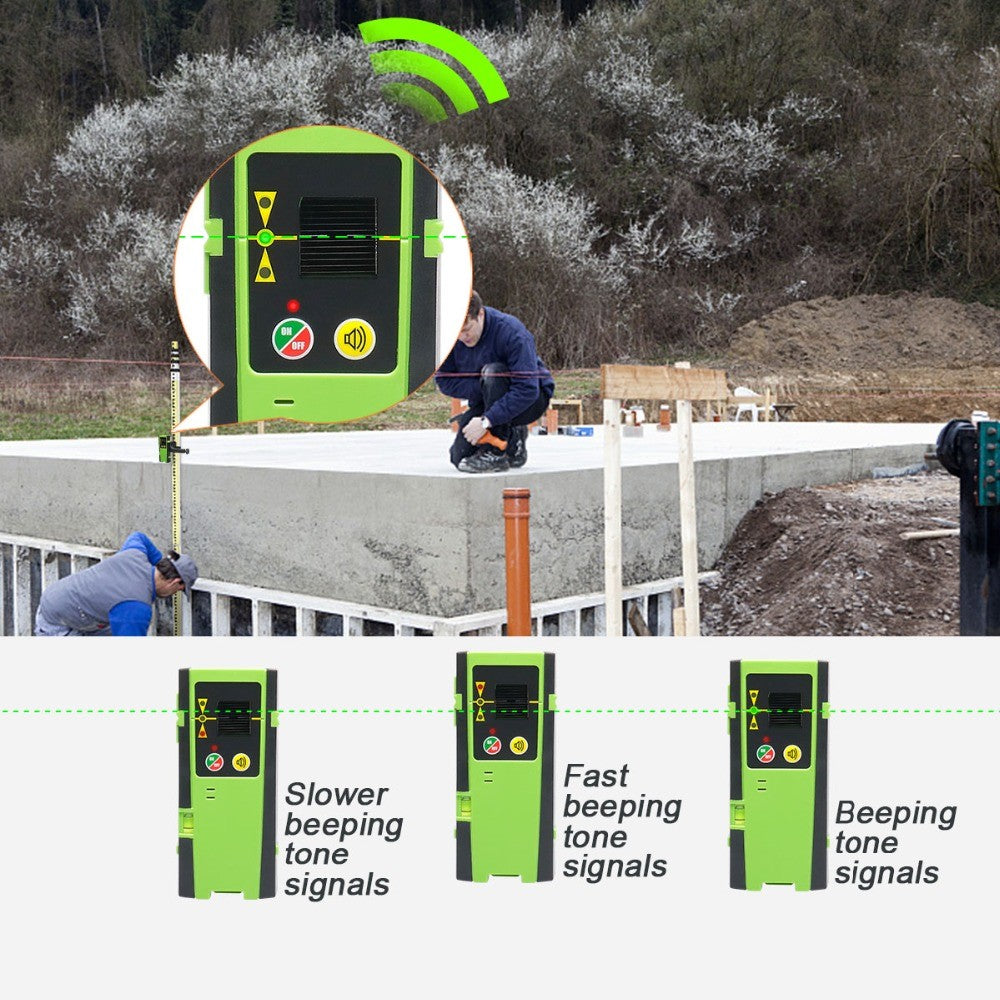
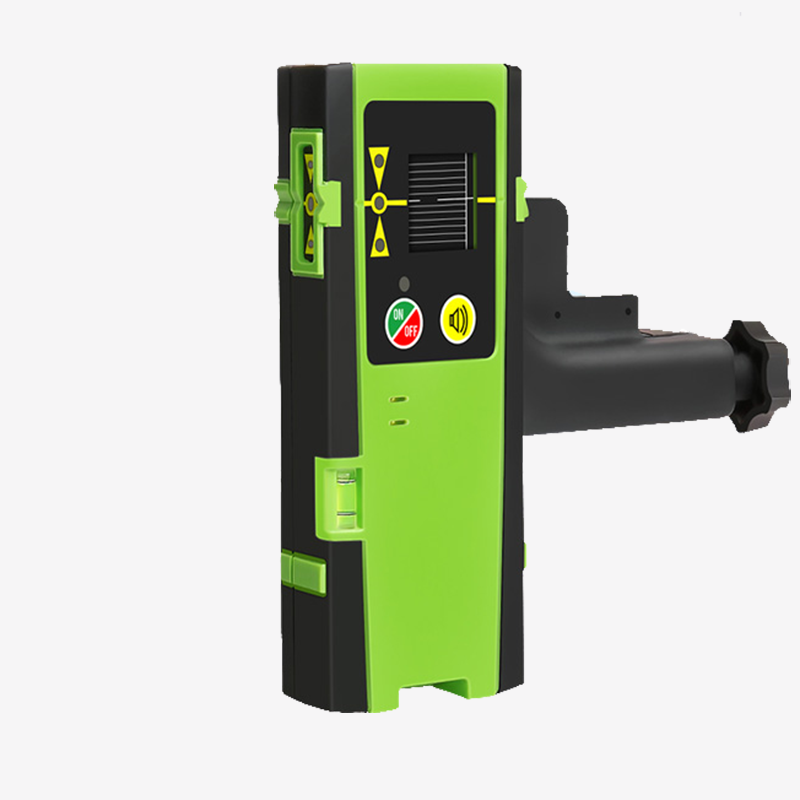
A laser level may quote one range for a visible line and another with a receiver. Those describe different ways of working. A detector can be useful when the compatible beam is too faint to mark by eye, but it needs the right laser type and operating mode.
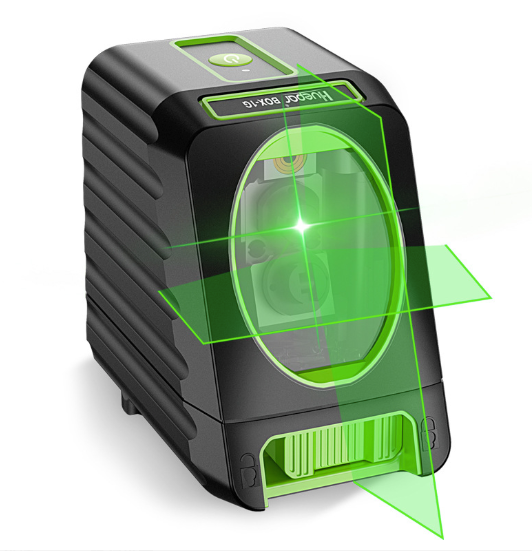
A green beam is not a promise of reliable direct-sunlight visibility. Distance, target finish, background light, line width and instrument output all affect the task. Two different models cannot isolate the effect of colour alone.
What the published observations show
Bob Vila describes a Huepar line as visible in weak light and midday shade but difficult in direct sunlight. THISisCarpentry records a rotary-laser line that looked dim indoors at 20 ft with incoming light, alongside differences in receiver response.
These pages were read on 21 September 2026. They are useful descriptions of conditions, but they do not provide a controlled colour comparison with fixed illumination and raw visibility thresholds. We have not tested these devices.
Make a daylight record useful
Keep the target, distance and instrument position fixed. Record weather, time, illumination at the target if a suitable meter is available, battery state and pulse setting. Assess visibility by eye separately from photographs.
For photographs, lock exposure and focus where possible and keep those settings across the comparison. Automatic camera processing can make a faint line look strong or suppress it. A bright photograph is not proof that the line was usable by an installer.
- Compare an interior wall, a window-lit wall, outdoor shade and direct sun separately.
- Use the same target surface and viewing position.
- Record whether the line can be marked confidently, not simply noticed.
- Keep receiver results in their own column.
Read the receiver consistently
Check the correct mode and sensitivity, then approach the beam from both above and below. The centre indication has a detection window; take account of that window and the mark width when judging small differences.
Bosch UK lists fine and rough accuracy of ±1 mm and ±3 mm for the LR 7, as observed in our research. These are official receiver specifications, not the total accuracy of the laser-and-receiver setup. Consult the current manual and exact compatibility list.
Sources & evidence
Source observations: 21 September 2026. These references describe the named devices and conditions; they do not establish current UK availability or universal compatibility.
Bob Vila: laser level test methodsRead on 21 September 2026. Published test descriptions lack a complete pre/post-drop millimetre table and a controlled light comparison.THISisCarpentry: Precision Lasers for Demanding ProjectsRead on 21 September 2026. A 2018 US comparison of two samples. Table differences relate to a two-position method, not single-distance error.Bosch Professional UK: PRO LR 7Official compatibility information read on 21 September 2026. Manufacturer claims, not our installation test; check the current exact model list and manual.